ICT Design
Telecom plans, backbone and riser diagrams, MDF/IDF layouts, rack elevations, pathway coordination, and Division 27 specifications — for new build, renovation, and fit-out.
Explore ICT DesignTelecom drawings, specifications, and construction-administration support for architecture and engineering firms, contractors, and building owners — as a complete package, or as overflow capacity working inside your team’s standards.
The practice is led by C. Morris, RCDD. Don’t take the site’s word for it — verify the listed name in BICSI’s public credential-holder search. A legitimate RCDD expects you to check.
Inquiry and construction-response expectations are written into the proposal for the actual scope. RFI windows are agreed before work starts, not improvised after an issue reaches the field.
This site publishes no fabricated statistics, client counts, or testimonials. If a number appears here, it’s real — the same rule our drawings follow.
Design the communications infrastructure other trades depend on, carry it through construction, or review someone else's package before it goes out – to BICSI, TIA, and NEC practice.
Telecom plans, backbone and riser diagrams, MDF/IDF layouts, rack elevations, pathway coordination, and Division 27 specifications — for new build, renovation, and fit-out.
Explore ICT DesignRFI responses, submittal review against the specification, bulletin revisions, and closeout records — carried through construction within a defined scope.
Explore Construction AdministrationIndependent review of in-house or third-party telecom packages before bid or issue — findings ranked by severity and tied to the governing reference.
Explore Standards & QA ReviewA typical telecom package, organized the way most A/E sets expect. Scope decides which of these a project needs.
Drawings come back in your title block and CAD standards, with a revision history on every sheet. Specifications are edited from your master or the owner’s standard, and checked against the drawings before issue.
What belongs in an RCDD drawing packageSheet series are illustrative. We follow your firm’s sheet numbering and specification format.
Most engagements start with one of these situations.
A consultant to own the telecom package and coordinate rooms, pathways, and ceilings with the rest of the design.
Division 27 design and specificationsPart-time Division 27 capacity: drawings, spec edits, and CA responses produced in your standards for your review.
Overflow support for A/E firmsTelecom design responsibility defined before procurement, with drawings the field can build from.
Design-build responsibility mapTelecom rooms, backbone, and documentation planned for operation and growth, not just opening day.
MDF and IDF room designDoes the RFP or project manual require an RCDD? See RCDD consultant engagement options.
Illustrative technical studies show the kinds of spaces, pathways, and review decisions coordinated in an ICT package. Project drawings remain project-specific.
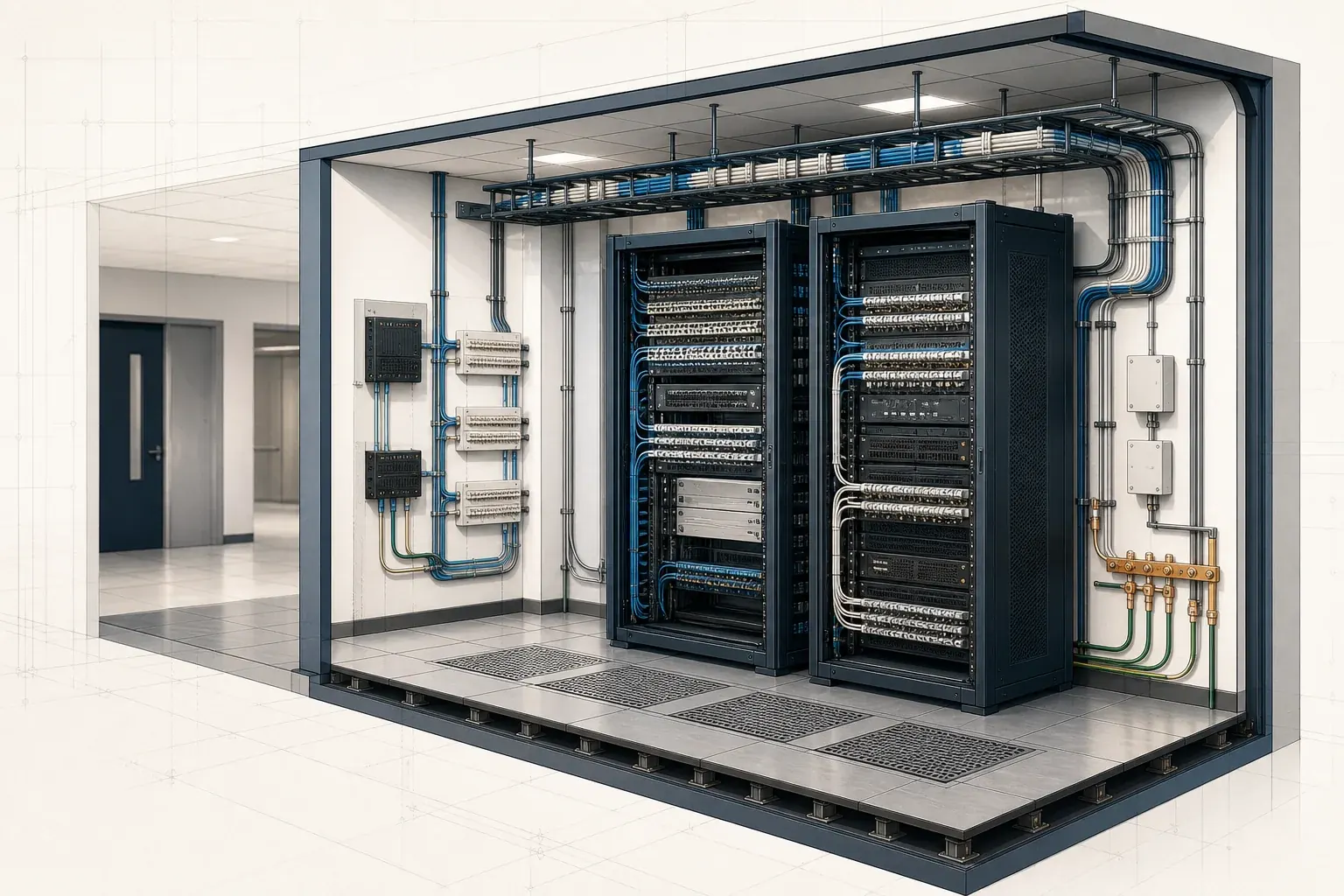
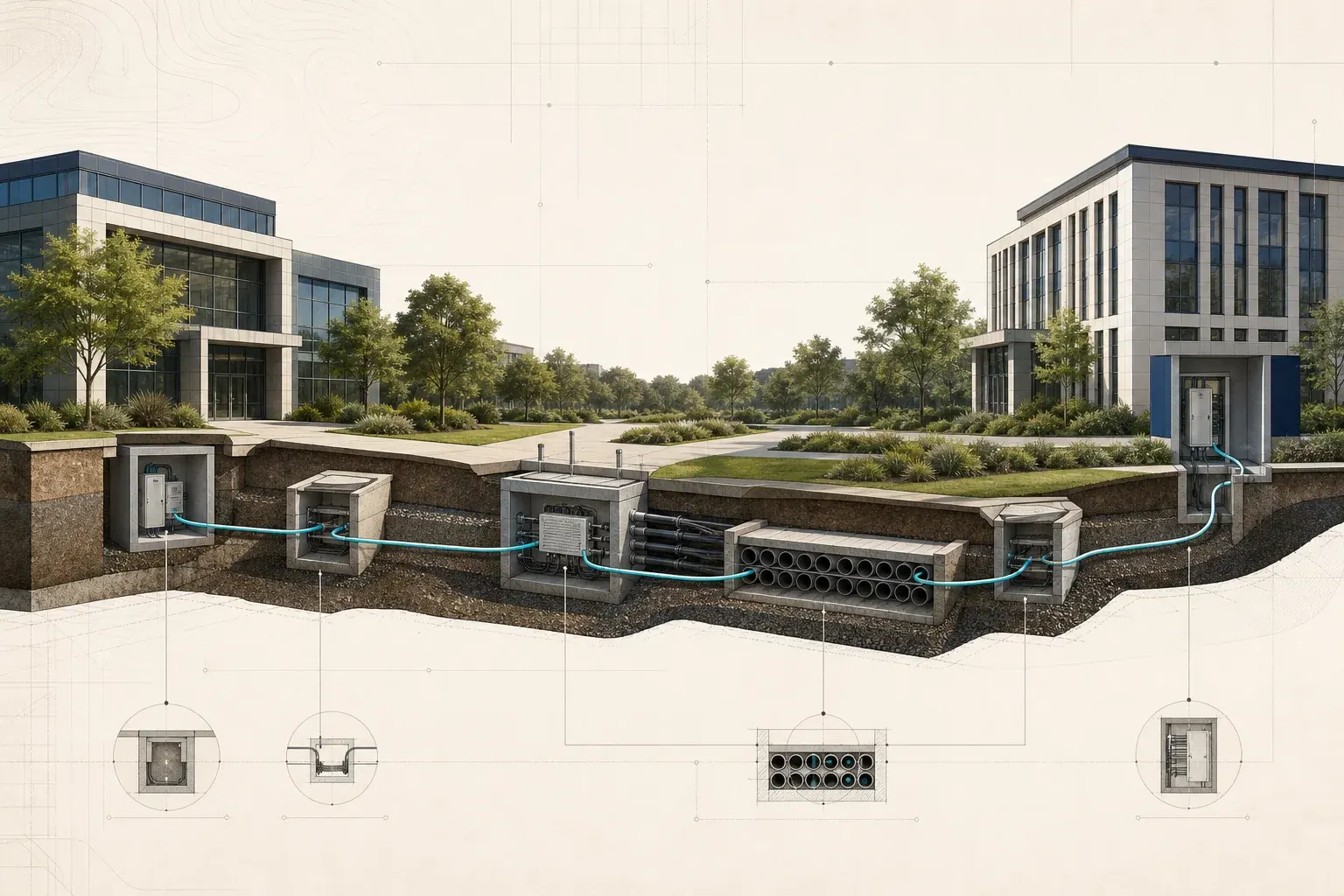
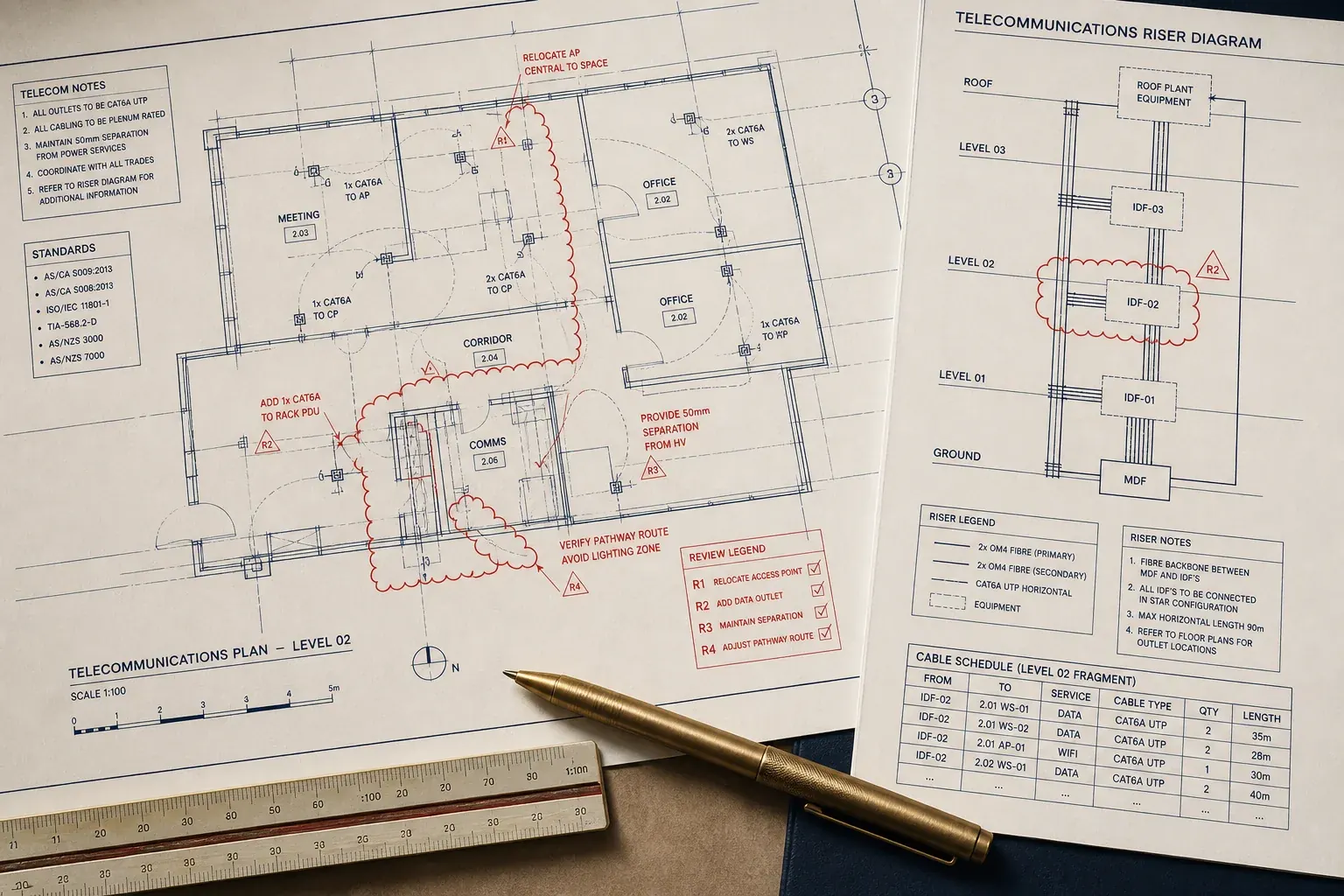
Concept illustrations — not photographs of completed client projects.
Four reasons firms and contractors keep credentialed ICT support within reach.
Defined ICT design scopes are led and reviewed by C. Morris, Registered Communications Distribution Designer — with the review and sign-off boundary written into the proposal.
Work happens in your file platform with version-controlled drawings, scheduled coordination, and written response windows. No desk in your office required.
Packages are checked against the project requirements, the applicable TIA and BICSI references, and the code coordination boundary before they are returned or issued.
For A/E and design firms at peak load: work in your title blocks and templates, returned through your QA review, with client-contact boundaries agreed up front.
Whether you bring us in at schematic design, for a CD push, or for a single peer review – the steps are the same.
Send the project information. You get a written scope, schedule, and fee before work starts.
Rooms, pathways, risers, racks, and schedules, coordinated with architecture and the other trades.
Drawings and Division 27 sections checked against each other and the project criteria, ready for review, bid, and issue.
RFI responses, submittal review, revisions, and closeout records, as the scope defines.
Have a telecom set approaching bid or issue? Get a severity-ranked review of scope gaps, coordination conflicts, and standards issues, with a fixed-fee scope confirmed before work begins. Drawings move only through an approved transfer method after we connect.
Start with the state-by-state telecom stamp guide, then check a room, run the design math, or take the working templates with you.
Send the project, the phase, and what you need. You'll get a clear next step within one business day, or a referral if we're not the right fit.